


2026 Nissan Sentra vs. 2026 Toyota Camry
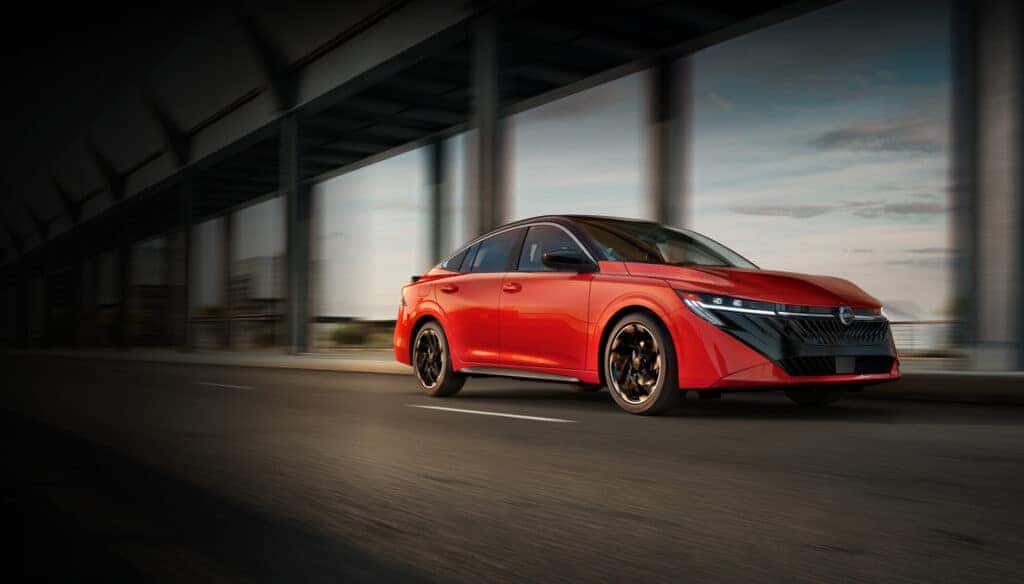
Choosing between a compact and a midsize sedan sounds straightforward until you’re standing in a showroom trying to justify a several-thousand-dollar price gap. The Sentra vs. Camry question comes up constantly among St. Louis-area shoppers, and honestly, for good reason.
Both are well-built, practical cars. But they’re designed for genuinely different people, and knowing which one actually fits your life can save you real money and a lot of second-guessing. If you’re already leaning toward the Sentra, feel free to view our current Sentra inventory while you read.
Two Good Sedans, Two Different Buyers: Setting Expectations Early
On paper, these two share a category. In practice, their target buyers don’t overlap nearly as much as you’d expect.
The Nissan Sentra is a compact sedan built for someone who wants dependable, affordable transportation. That could be a first-time buyer, a recent college grad, a commuter keeping a close eye on monthly expenses, or anyone who simply wants a solid sedan that doesn’t drain the bank.
The Toyota Camry speaks to a different crowd entirely. It’s a midsize hybrid sedan with a long reputation for comfort, power, and refinement. As of 2026, Toyota offers the Camry exclusively as a hybrid. Families needing extra room, high-mileage drivers focused on fuel savings, buyers willing to pay more upfront for a more capable daily experience, those are Camry buyers.
| Feature | Sentra S (base) | Camry LE (FWD) |
| Engine | 2.0L 4-cylinder | 2.5L hybrid 4-cylinder |
| Drivetrain | FWD | FWD |
| Horsepower | 149 net hp @ 6,000 RPM | 225 net hp (FWD) |
| Torque | 146 lb-ft @ 4,000 RPM | 163 lb-ft @ 5,200 RPM (engine) |
| Fuel Economy | 30 city / 38 hwy / 33 combined MPG | Up to 53 city / 50 hwy / 51 combined MPG |
| Passenger Volume | 96.1 cu. ft. | 99.9 cu. ft. |
| Starting MSRP | $22,600 | $29,300 |
Neither choice is wrong. They’re just solving different problems.
Price and Value: Where the Sentra Pulls Ahead
Price is usually the first filter people apply when car shopping, and this is where the comparison gets clear fast.
The Sentra’s Starting Point
The Sentra starts at $22,600 MSRP, which makes it one of the most affordable new sedans on the market right now. That’s not a compromise position. Nissan has made sure that even the base S trim comes with a solid feature set. Move up to the SR and the value proposition gets even stronger, adding upgraded styling and technology without crossing into price territory that requires a second thought.
What Drives the Camry’s Cost Up
The Camry starts at $29,300 MSRP, roughly $6,700 more than the Sentra. Some of that reflects its larger size, more powerful hybrid powertrain, and broader standard equipment. For buyers who genuinely want those features, the premium makes sense.
For buyers who don’t need them, it can feel like paying for capability that simply won’t matter day to day. Spread across a multi-year financing term, that gap still translates to a real monthly payment difference, just a smaller one than the sticker might suggest.
Performance and Powertrain: A Tale of Two Philosophies
This is where the comparison diverges most clearly. One car prioritizes efficiency and simplicity. The other pairs real power with a hybrid system. Different philosophies, different drivers.
Sentra’s 2.0L Engine: Practical and Predictable
The Sentra runs a 2.0L four-cylinder producing 149 net hp at 6,000 RPM and 146 lb-ft of torque at 4,000 RPM. For the typical buyer, whether commuting through St. Louis traffic, merging onto Highway 40, or running errands around Herculaneum, this engine is more than adequate. It’s smooth, predictable, and built to keep operating costs manageable over time.
You’re not buying a Sentra to sprint down a highway entrance ramp. You’re buying it to get where you’re going reliably and affordably. If you’re ready to take the next step, you can apply for financing through our team today.
Camry’s All-Hybrid Powertrain: More Power, Higher Price
The 2026 Camry pairs a 2.5L hybrid four-cylinder with an electric motor, producing 225 net hp in FWD configuration or 232 net hp with AWD. That’s a meaningful power advantage over the Sentra. For buyers who want a more engaging driving experience and are comfortable with the upfront cost, the Camry delivers.
The trade-off is added complexity. Hybrid systems cost more to build and, in some cases, more to service over the long haul. If a more dynamic feel is a genuine priority, the Camry earns its price. If it isn’t, you may be paying for capability you’ll rarely use.
Fuel Economy: Real Differences, Real Context
Both vehicles are genuinely efficient, just through different means.
The Sentra delivers 30 city / 38 highway / 33 combined MPG from its conventional engine. No hybrid battery pack, no regenerative braking. Just solid mileage and a straightforward ownership experience.
The Camry’s hybrid system achieves up to 51 combined MPG, a 55% efficiency advantage in combined driving. That’s a real gap, and it’s worth acknowledging honestly. For high-mileage drivers or anyone spending significant time in stop-and-go traffic, the Camry’s hybrid system does meaningful work, especially where regenerative braking recaptures energy most effectively.
That said, for the average St. Louis commuter driving a mix of city streets and freeway miles, the Sentra’s lower purchase price may still offset years of fuel savings. The math depends heavily on annual mileage. At moderate driving distances, the $6,700 price premium narrows the payback window, but most buyers will still need several years of driving before fuel savings catch up to the upfront cost.
Size, Space, and Everyday Livability
Space is a practical concern that often gets underestimated until you’re loading groceries into a too-small trunk or folding yourself into a cramped back seat.
Compact vs. Midsize: Passenger and Cargo Room
The Sentra is a compact sedan, and for most buyers, that’s perfectly adequate. Two adults up front, two in the back, a reasonable trunk. It covers most daily situations without issue. Where it may feel limiting is on longer road trips with a full car, or if you regularly haul gear, luggage, or sports equipment.
The Camry, as a midsize, offers more of everything. Its 99.9 cu. ft. of passenger volume versus the Sentra’s 96.1 cu. ft. is noticeable, particularly in rear legroom. For family road trips or anyone who regularly carries multiple passengers, that extra space is one of the clearest functional justifications for the Camry’s higher price.
Technology and Safety Features
Both vehicles come equipped with modern driver assistance technology. The Sentra includes Nissan’s Safety Shield 360 as standard across every trim, covering automatic emergency braking with pedestrian and cyclist detection, blind spot warning, rear cross-traffic alert, and lane departure warning.
Wireless Apple CarPlay and wireless Android Auto are also standard across the lineup, which makes even the base S trim feel genuinely competitive at its price point. Stepping up to the SR or SL adds larger displays, premium audio, and upgraded interior materials.
The Camry tends to offer more advanced technology as standard across its lineup, including hybrid-specific energy monitoring systems. For buyers who want the most comprehensive safety and tech package without hunting through trim levels, the Camry often delivers more right out of the box. Whether that justifies the price difference comes down to your specific priorities.
Best For: Who Should Choose Which
| Aspect | 2026 Nissan Sentra | 2026 Toyota Camry |
| Best For | Budget-conscious buyers, first-time car owners, commuters prioritizing value | Families, high-mileage drivers, buyers seeking maximum efficiency and power |
| Key Strength | $22,600 starting MSRP, solid MPG for a non-hybrid, standard Safety Shield 360, standard wireless CarPlay and Android Auto | All-hybrid powertrain, up to 51 combined MPG, 225-232 hp, spacious midsize interior |
| Primary Advantage | ~$6,700 lower starting price | 55% better combined fuel economy, more horsepower, more interior space |
The 2026 Nissan Sentra is the right call if you’re prioritizing affordability, manageable monthly payments, and a practical sedan for daily driving. It’s a natural fit for first-time buyers, single drivers or couples, urban commuters, and anyone who wants a well-equipped new car without stretching their budget.
The 2026 Toyota Camry makes more sense if you need more passenger room, want a more powerful driving experience, or are specifically looking for a hybrid with strong long-term efficiency and are comfortable paying more upfront for it.
Neither is a wrong answer. They’re just right for different people.
Visit AutoCenters Nissan in St. Louis
See the Sentra in Person
If the Sentra sounds like the right fit, the best next step is getting behind the wheel. AutoCenters Nissan in Herculaneum serves the entire St. Louis metro area with over 1,000 vehicles at one location, making it one of the most straightforward places to shop for a new Nissan in the region.
What We Offer
Every new Nissan at AutoCenters Nissan comes with a complimentary lifetime warranty, the kind of long-term peace of mind you won’t find at most other dealerships. A 30-day return policy on qualifying vehicles takes the pressure off the decision. Our in-house financing team works with a wide range of credit situations, and factory-authorized service is available at the same location when maintenance comes up.
Get in Touch
For St. Louis drivers who want reliable value, smart standard features, and a no-hassle buying experience, the 2026 Nissan Sentra is worth a serious look. Contact us to schedule a test drive or ask our team any questions. We’re here to help you find the right fit.
0 comment(s) so far on 2026 Nissan Sentra vs. 2026 Toyota Camry